




 This topic is locked

General Thread - Closed! Please use newer GT
Started by XXB4XX, Aug 27 2008 01:42 PM
53599 replies to this topic
#24241

buzzda
-

- Members
-

- 3370 posts
Regular Member
- Gender:Male
Posted 10 October 2010 - 12:15 PM
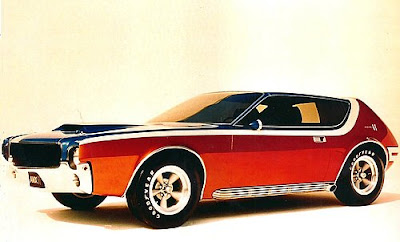
things you shouldn't try and re-invent:
#24242
buzzda
-
- Members
-
- 3370 posts
Regular Member
- Gender:Male
Posted 10 October 2010 - 12:21 PM
Hmmmm, seems like I'm

#24243
skillionaire
-

- Members
-
- 53591 posts
Mr. Freshley
- Gender:Not Telling
- Location:Mise En Place
Posted 10 October 2010 - 12:25 PM
UNFUKWTHABL may be a bit more subdued but it's still a $400k+ Mercedes CLK DTM. Insanity. INSANITY. But I agree with you.
I could spend a while on this site...
http://www.autosalon...e/en/index.html
!
I could spend a while on this site...
http://www.autosalon...e/en/index.html
!
#24244
buzzda
-
- Members
-
- 3370 posts
Regular Member
- Gender:Male
Posted 10 October 2010 - 12:39 PM
UNFUKWTHABL may be a bit more subdued but it's still a $400k+ Mercedes CLK DTM. Insanity. INSANITY. But I agree with you.
I could spend a while on this site...
http://www.autosalon...e/en/index.html
!
That's what I like, inconspicuous rocketships.
That site is awesomeness at it limit... if you can't find something that hits the right button there I'd be getting to the doc pretty quick as your hearts prob stopped beating.
#24245
buzzda
-
- Members
-
- 3370 posts
Regular Member
- Gender:Male
Posted 10 October 2010 - 12:43 PM
Where is everyone??
Th'all must think they've got lives or something??
Th'all must think they've got lives or something??
#24246
skillionaire
-
- Members
-
- 53591 posts
Mr. Freshley
- Gender:Not Telling
- Location:Mise En Place
Posted 10 October 2010 - 12:44 PM
Bathurst bro! Bathurst.
#24247
buzzda
-
- Members
-
- 3370 posts
Regular Member
- Gender:Male
Posted 10 October 2010 - 12:49 PM
Hahahaha... I need to get my head out of the sand, kids commandeered the TV this morn. Wonder how Lukosh is gettin on with his braziilian mates??
#24248
skillionaire
-
- Members
-
- 53591 posts
Mr. Freshley
- Gender:Not Telling
- Location:Mise En Place
Posted 10 October 2010 - 12:54 PM
Brazilian BBQ sounds tight as hell. I'm hungry just thinking about it. Knowing Lukosh, he'll be a few beers into the day. I'm with you on that tip though bro.
Bathurst parties are usually about 5% of the time watching the race.
Bathurst parties are usually about 5% of the time watching the race.
#24249
buzzda
-
- Members
-
- 3370 posts
Regular Member
- Gender:Male
Posted 10 October 2010 - 12:57 PM
Sure does... if there's any brazllian women there that 5% will shrink pretty fast... if only the weather was warmer.
#24250
skillionaire
-
- Members
-
- 53591 posts
Mr. Freshley
- Gender:Not Telling
- Location:Mise En Place
Posted 10 October 2010 - 01:04 PM
"I knew there was parts missing from the car when I didn't have to open the door to get out"
Haha. Yo.
I don't know though buzzsaw, I'm tipping that it's probably some kind of Mardi Gras style event that he's going to - isn't Brassillliiaaa where Mardi Gras is from (apart from sydney) ?
I'd check. But I'm not hundred percent on Googling mardi gras.
On another one, when do you think that Googling will be Webster Mirriam approved?
Haha. Yo.
I don't know though buzzsaw, I'm tipping that it's probably some kind of Mardi Gras style event that he's going to - isn't Brassillliiaaa where Mardi Gras is from (apart from sydney) ?
I'd check. But I'm not hundred percent on Googling mardi gras.
On another one, when do you think that Googling will be Webster Mirriam approved?
#24251
buzzda
-
- Members
-
- 3370 posts
Regular Member
- Gender:Male
Posted 10 October 2010 - 01:15 PM
Who's Webster Mirriam?
#24252
skillionaire
-
- Members
-
- 53591 posts
Mr. Freshley
- Gender:Not Telling
- Location:Mise En Place
Posted 10 October 2010 - 01:16 PM
Dictionary.
#24253
buzzda
-
- Members
-
- 3370 posts
Regular Member
- Gender:Male
Posted 10 October 2010 - 01:18 PM
Mardi Gras
From Wikipedia, the free encyclopediaJump to: navigation, search
This article is about the carnival. For other uses, see Mardi Gras (disambiguation).
Mardi Gras
(Also known as Shrove Tuesday or Fat Tuesday)
Costumed musicians, New Orleans
Type Local, cultural, Catholic
Significance Celebration prior to fasting season of Lent.
2011 date 8 March
Celebrations Parades, parties
Related to Carnival
The terms "Mardi Gras" (pronounced /ˈmɑrdiɡrɑː/), "Mardi Gras season", and "Carnival season",[1][2][3][4][5][6] in English, refer to events of the Carnival celebrations, beginning on or after Epiphany and ending on the day before Ash Wednesday. Mardi Gras is French for "Fat Tuesday" (in ethnic English tradition, Shrove Tuesday), referring to the practice of the last night of eating richer, fatty foods before the ritual fasting of the Lenten season, which started on Ash Wednesday. Related popular practices were associated with celebrations before the fasting and religious obligations associated with the penitential season of Lent. Popular practices included wearing masks and costumes, overturning social conventions, dancing, sports competitions, parades, etc. Similar expressions to Mardi Gras appear in other European languages sharing the Christian tradition. In English, the day is called Shrove Tuesday, associated with the religious requirement for confession before Lent begins.
In many areas, the term "Mardi Gras" has come to mean the whole period of activity related to the celebratory events, beyond just the single day. In some US cities, it is now called "Mardi Gras Day" or "Fat Tuesday".[1][2][3][4][5][6] The festival season varies from city to city, as some traditions consider Mardi Gras the entire period between Epiphany or Twelfth Night and Ash Wednesday.[7] Others treat the final three-day period before Ash Wednesday as the Mardi Gras.[8] In Mobile, Alabama, Mardi Gras-associated social events begin in November, followed by mystic society balls on Thanksgiving,[7][9] then New Year's Eve, followed by parades and balls in January and February, celebrating up to midnight before Ash Wednesday. In earlier times parades were held on New Year's Day.[7] Other cities famous for Mardi Gras celebrations include Rio de Janeiro in Brazil, Sydney in Australia, Quebec City, Quebec in Canada; Mazatlan in Mexico; and New Orleans, Louisiana in the United States.
Carnival is an important celebration in Catholic European nations. In the United Kingdom and Ireland, the week before Ash Wednesday is called "shrovetide", ending on Shrove Tuesday. It has its popular celebratory aspects as well. Pancakes are a traditional food. Pancakes and related fried breads or pastries made with sugar, fat and eggs are also traditionally consumed at this time in many parts of Latin America and the Caribbean.
Contents [hide]
1 Belgium
2 Canada
2.1 Quebec
3 Germany
4 Italy
5 Netherlands
6 Sweden
7 United States
8 See also
9 References
10 External links
[edit] Belgium
In the Belgian city of Binche the Mardi Gras festival is the most important day of the year and the summit of the Carnival of Binche. Around 1000 Gilles can be found dancing throughout the city from morning till well past dusk, whilst traditional carnival songs play. In 2003, the "Carnival of Binche" was proclaimed one of the Masterpieces of the Oral and Intangible Heritage of Humanity by UNESCO.
[edit] Canada
Mardi Gras celebrations are common throughout the country, especially in major cities like Toronto, St. John's, Vancouver, and Montreal.
[edit] Quebec
French-speaking Quebec is the province where Mardi Gras is most widely celebrated in Canada. Quebec City and Montreal hold Mardi Gras celebrations, with events such as music festivals, comedy festivals, food festivals, and street parties.[10]
Quebec City is also famous for the Quebec Winter Carnival, which usually starts on the first Friday of January and continues for 17 days. With close to one million participants, it has grown to become the largest winter celebration in the world.[11] Festival events include a winter amusement park, with attractions such as skiing, snow rafting, and snow sled-slides.
[edit] Germany
The celebration of Mardi Gras in Germany is called Karneval, Fastnacht, or Fasching.[12] Fastnacht means "Eve of the Beginning of the Fast", and is celebrated the day before Ash Wednesday.
The most famous parades are held in Cologne, Mainz, and Düsseldorf on the Monday before Ash Wednesday, called Rosenmontag.
[edit] Italy
Carnevale is the traditional pre-Lenten celebration in Italy. Carnevale was Mardi Gras predecessor. The French borrowed this idea and made it popular. This is a time of merry-making, masquerade processions, masked balls, parades, pageants, jugglers, magicians, stilt walkers, elegant costumes and opulent masks, singing and dancing, fireworks, and outdoor feasts in the weeks prior to Ash Wednesday. The festivities of the last days of carnevale are the most intense as they culminate on Martedí Grasso (Mardi Gras or Shrove Tuesday). There are traditional foods and dolci (sweets) distinctively associated with carnevale, including fritelle, crespelle, sfingi, castagnole, cenci, nodi, chiacchere, bugie, galani, fritole, berlingaccio, sanguinaccio and tortelli, among others.
In Milan Mardi Gras is not the climax of Carnival, since the Carnival lasts four more days, ending on the Saturday after Ash Wednesday, because of the Ambrosian rite. The last day of Carnival, therefore, is the "Sabato grasso" (Shrove or Fat Saturday).
[edit] Netherlands
The Netherlands also has a festival similar to Mardi Gras. It's called Carnaval and is similar to the Venice Carnival. The meaning of the word Carnaval is 'Carne Vale' which means Goodbye to the meat in Latin. It marks the beginning of the sacred period that leads to Easter.
The real festival is held in the southern provinces of the Netherlands, which are Limburg & Noord-Brabant.
[edit] Sweden
In Sweden the celebration is called Fettisdagen. It comes from the word "fett" (fat) and "tisdag" (Tuesday). Originally, this was the only day one should eat semlor (skinny Tuesday buns). These are now sold in most grocery stores and bakeries preceding the holiday, and up until Easter.
[edit] United States
Mardi Gras 2009 Celebrations in the French Quarter, New Orleans, Louisiana USAMain article: Mardi Gras in the United States
While not observed nationally throughout the United States, a number of traditionally ethnic French cities and regions in the country have notable celebrations. Mardi Gras arrived in North America as a French Catholic tradition with the Le Moyne brothers,[13] Pierre Le Moyne d'Iberville and Jean-Baptiste Le Moyne de Bienville, in the late 17th century, when King Louis XIV sent the pair to defend France's claim on the territory of Louisiane, which included what are now the U.S. states of Alabama, Mississippi, and Louisiana.[13]
The expedition, led by Iberville, entered the mouth of the Mississippi River on the evening of March 2, 1699, Lundi Gras. They did not yet know it was the river explored and claimed for France by René-Robert Cavelier, Sieur de La Salle in 1683. The party proceeded upstream to a place on the west bank about 60 miles downriver from where New Orleans is today, and made camp. This was on March 3, 1699, Mardi Gras, so in honor of this holiday, Iberville named the spot Point du Mardi Gras (French: "Mardi Gras Point") and called the nearby tributary Bayou Mardi Gras. Bienville went on to found the settlement of Mobile, Alabama in 1702 as the first capital of French Louisiana.[14] In 1703 French settlers in Mobile began the Mardi Gras celebration tradition.[13][15][16] By 1720, Biloxi had been made capital of Louisiana. The French customs had already accompanied colonists who settled there.[13]
In 1723, the capital of Louisiana was moved to New Orleans, founded in 1718.[14] The tradition has expanded to the point that it became strongly associated with the city in popular perception, and embraced by residents of New Orleans beyond those of French or Catholic heritage. Mardi Gras celebrations are part of the basis of the slogan, Laissez les bons temps rouler, (Let the good times roll) and the nickname "Big Easy".[13] Mobile, Alabama, the former capital of New France, also has a long tradition of celebrating Mardi Gras. Other cities along the Gulf Coast formerly occupied and owned by the French from Pensacola, Florida, and its suburbs to Lafayette, Louisiana, have active Mardi Gras celebrations. In the rual Acadiana area, many Cajuns celebrate with the Courir de Mardi Gras, a tradition that dates to medieval celebrations in France.[17] In more recent times several other U.S. cities without a French heritage have instituted a kind of Mardi Gras celebration; for instance, the UETA Jamboozie festival is held late January in Laredo, Texas.
From Wikipedia, the free encyclopediaJump to: navigation, search
This article is about the carnival. For other uses, see Mardi Gras (disambiguation).
Mardi Gras
(Also known as Shrove Tuesday or Fat Tuesday)
Costumed musicians, New Orleans
Type Local, cultural, Catholic
Significance Celebration prior to fasting season of Lent.
2011 date 8 March
Celebrations Parades, parties
Related to Carnival
The terms "Mardi Gras" (pronounced /ˈmɑrdiɡrɑː/), "Mardi Gras season", and "Carnival season",[1][2][3][4][5][6] in English, refer to events of the Carnival celebrations, beginning on or after Epiphany and ending on the day before Ash Wednesday. Mardi Gras is French for "Fat Tuesday" (in ethnic English tradition, Shrove Tuesday), referring to the practice of the last night of eating richer, fatty foods before the ritual fasting of the Lenten season, which started on Ash Wednesday. Related popular practices were associated with celebrations before the fasting and religious obligations associated with the penitential season of Lent. Popular practices included wearing masks and costumes, overturning social conventions, dancing, sports competitions, parades, etc. Similar expressions to Mardi Gras appear in other European languages sharing the Christian tradition. In English, the day is called Shrove Tuesday, associated with the religious requirement for confession before Lent begins.
In many areas, the term "Mardi Gras" has come to mean the whole period of activity related to the celebratory events, beyond just the single day. In some US cities, it is now called "Mardi Gras Day" or "Fat Tuesday".[1][2][3][4][5][6] The festival season varies from city to city, as some traditions consider Mardi Gras the entire period between Epiphany or Twelfth Night and Ash Wednesday.[7] Others treat the final three-day period before Ash Wednesday as the Mardi Gras.[8] In Mobile, Alabama, Mardi Gras-associated social events begin in November, followed by mystic society balls on Thanksgiving,[7][9] then New Year's Eve, followed by parades and balls in January and February, celebrating up to midnight before Ash Wednesday. In earlier times parades were held on New Year's Day.[7] Other cities famous for Mardi Gras celebrations include Rio de Janeiro in Brazil, Sydney in Australia, Quebec City, Quebec in Canada; Mazatlan in Mexico; and New Orleans, Louisiana in the United States.
Carnival is an important celebration in Catholic European nations. In the United Kingdom and Ireland, the week before Ash Wednesday is called "shrovetide", ending on Shrove Tuesday. It has its popular celebratory aspects as well. Pancakes are a traditional food. Pancakes and related fried breads or pastries made with sugar, fat and eggs are also traditionally consumed at this time in many parts of Latin America and the Caribbean.
Contents [hide]
1 Belgium
2 Canada
2.1 Quebec
3 Germany
4 Italy
5 Netherlands
6 Sweden
7 United States
8 See also
9 References
10 External links
[edit] Belgium
In the Belgian city of Binche the Mardi Gras festival is the most important day of the year and the summit of the Carnival of Binche. Around 1000 Gilles can be found dancing throughout the city from morning till well past dusk, whilst traditional carnival songs play. In 2003, the "Carnival of Binche" was proclaimed one of the Masterpieces of the Oral and Intangible Heritage of Humanity by UNESCO.
[edit] Canada
Mardi Gras celebrations are common throughout the country, especially in major cities like Toronto, St. John's, Vancouver, and Montreal.
[edit] Quebec
French-speaking Quebec is the province where Mardi Gras is most widely celebrated in Canada. Quebec City and Montreal hold Mardi Gras celebrations, with events such as music festivals, comedy festivals, food festivals, and street parties.[10]
Quebec City is also famous for the Quebec Winter Carnival, which usually starts on the first Friday of January and continues for 17 days. With close to one million participants, it has grown to become the largest winter celebration in the world.[11] Festival events include a winter amusement park, with attractions such as skiing, snow rafting, and snow sled-slides.
[edit] Germany
The celebration of Mardi Gras in Germany is called Karneval, Fastnacht, or Fasching.[12] Fastnacht means "Eve of the Beginning of the Fast", and is celebrated the day before Ash Wednesday.
The most famous parades are held in Cologne, Mainz, and Düsseldorf on the Monday before Ash Wednesday, called Rosenmontag.
[edit] Italy
Carnevale is the traditional pre-Lenten celebration in Italy. Carnevale was Mardi Gras predecessor. The French borrowed this idea and made it popular. This is a time of merry-making, masquerade processions, masked balls, parades, pageants, jugglers, magicians, stilt walkers, elegant costumes and opulent masks, singing and dancing, fireworks, and outdoor feasts in the weeks prior to Ash Wednesday. The festivities of the last days of carnevale are the most intense as they culminate on Martedí Grasso (Mardi Gras or Shrove Tuesday). There are traditional foods and dolci (sweets) distinctively associated with carnevale, including fritelle, crespelle, sfingi, castagnole, cenci, nodi, chiacchere, bugie, galani, fritole, berlingaccio, sanguinaccio and tortelli, among others.
In Milan Mardi Gras is not the climax of Carnival, since the Carnival lasts four more days, ending on the Saturday after Ash Wednesday, because of the Ambrosian rite. The last day of Carnival, therefore, is the "Sabato grasso" (Shrove or Fat Saturday).
[edit] Netherlands
The Netherlands also has a festival similar to Mardi Gras. It's called Carnaval and is similar to the Venice Carnival. The meaning of the word Carnaval is 'Carne Vale' which means Goodbye to the meat in Latin. It marks the beginning of the sacred period that leads to Easter.
The real festival is held in the southern provinces of the Netherlands, which are Limburg & Noord-Brabant.
[edit] Sweden
In Sweden the celebration is called Fettisdagen. It comes from the word "fett" (fat) and "tisdag" (Tuesday). Originally, this was the only day one should eat semlor (skinny Tuesday buns). These are now sold in most grocery stores and bakeries preceding the holiday, and up until Easter.
[edit] United States
Mardi Gras 2009 Celebrations in the French Quarter, New Orleans, Louisiana USAMain article: Mardi Gras in the United States
While not observed nationally throughout the United States, a number of traditionally ethnic French cities and regions in the country have notable celebrations. Mardi Gras arrived in North America as a French Catholic tradition with the Le Moyne brothers,[13] Pierre Le Moyne d'Iberville and Jean-Baptiste Le Moyne de Bienville, in the late 17th century, when King Louis XIV sent the pair to defend France's claim on the territory of Louisiane, which included what are now the U.S. states of Alabama, Mississippi, and Louisiana.[13]
The expedition, led by Iberville, entered the mouth of the Mississippi River on the evening of March 2, 1699, Lundi Gras. They did not yet know it was the river explored and claimed for France by René-Robert Cavelier, Sieur de La Salle in 1683. The party proceeded upstream to a place on the west bank about 60 miles downriver from where New Orleans is today, and made camp. This was on March 3, 1699, Mardi Gras, so in honor of this holiday, Iberville named the spot Point du Mardi Gras (French: "Mardi Gras Point") and called the nearby tributary Bayou Mardi Gras. Bienville went on to found the settlement of Mobile, Alabama in 1702 as the first capital of French Louisiana.[14] In 1703 French settlers in Mobile began the Mardi Gras celebration tradition.[13][15][16] By 1720, Biloxi had been made capital of Louisiana. The French customs had already accompanied colonists who settled there.[13]
In 1723, the capital of Louisiana was moved to New Orleans, founded in 1718.[14] The tradition has expanded to the point that it became strongly associated with the city in popular perception, and embraced by residents of New Orleans beyond those of French or Catholic heritage. Mardi Gras celebrations are part of the basis of the slogan, Laissez les bons temps rouler, (Let the good times roll) and the nickname "Big Easy".[13] Mobile, Alabama, the former capital of New France, also has a long tradition of celebrating Mardi Gras. Other cities along the Gulf Coast formerly occupied and owned by the French from Pensacola, Florida, and its suburbs to Lafayette, Louisiana, have active Mardi Gras celebrations. In the rual Acadiana area, many Cajuns celebrate with the Courir de Mardi Gras, a tradition that dates to medieval celebrations in France.[17] In more recent times several other U.S. cities without a French heritage have instituted a kind of Mardi Gras celebration; for instance, the UETA Jamboozie festival is held late January in Laredo, Texas.
#24254
skillionaire
-
- Members
-
- 53591 posts
Mr. Freshley
- Gender:Not Telling
- Location:Mise En Place
Posted 10 October 2010 - 01:20 PM
The more you know, ay?
#24255
buzzda
-
- Members
-
- 3370 posts
Regular Member
- Gender:Male
Posted 10 October 2010 - 01:21 PM
•The Sydney Gay and Lesbian Mardi Gras traces its origins to 1969 New York and 1978 Sydney.
In June 1969, in a bar in New York called the Stonewall, gay men, lesbians and transsexuals barricaded police as a protest against police raids on gay and lesbian bars. This event, resulting in what is now remembered as the Stonewall Riots, is commemorated as International Gay Solidarity Day.
In 1978, in Sydney, more than 1000 marchers were marking International Gay Solidarity Day along Oxford St, southeast of the city centre, when police revoked the march permit and 53 of the marchers were arrested in the riot that ensured. Another 100 people were arrested in later protests.
All charges were later dropped and another march was held the following year, 1979, when the name Mardi Gras was adopted.
In June 1969, in a bar in New York called the Stonewall, gay men, lesbians and transsexuals barricaded police as a protest against police raids on gay and lesbian bars. This event, resulting in what is now remembered as the Stonewall Riots, is commemorated as International Gay Solidarity Day.
In 1978, in Sydney, more than 1000 marchers were marking International Gay Solidarity Day along Oxford St, southeast of the city centre, when police revoked the march permit and 53 of the marchers were arrested in the riot that ensured. Another 100 people were arrested in later protests.
All charges were later dropped and another march was held the following year, 1979, when the name Mardi Gras was adopted.
#24256
buzzda
-
- Members
-
- 3370 posts
Regular Member
- Gender:Male
Posted 10 October 2010 - 01:24 PM
something like that... Knowledge is Power?The more you know, ay?
#24257
buzzda
-
- Members
-
- 3370 posts
Regular Member
- Gender:Male
Posted 10 October 2010 - 01:35 PM
Best city name in the world??
I'm goin with Fukuoka (fuk-u-o-kay is how I pronouce it).
Discuss.
I'm goin with Fukuoka (fuk-u-o-kay is how I pronouce it).
Discuss.
#24258
buzzda
-
- Members
-
- 3370 posts
Regular Member
- Gender:Male
Posted 10 October 2010 - 01:41 PM
On another one, when do you think that Googling will be Webster Mirriam approved?
Seems it already is
July 7, 2006 09:30 AM
google): (transitive verb) To use the Google search engine to obtain information about (as a person) on the World Wide Web
Merriam-Webster on Thursday stamped its approval on a raft of words that will appear in its next dictionary update, including the technology-related "google," "spyware," and "mouse potato."
#24259
skillionaire
-
- Members
-
- 53591 posts
Mr. Freshley
- Gender:Not Telling
- Location:Mise En Place
Posted 10 October 2010 - 01:46 PM
Haha, how fucking bored are you mate? We might just rock a full page here. Although your previous attempt had no real conversation in it, you can take this page as a landmark moment in SC history. Also, your last FP was shared with a pewf.
What the fuck is a mouse potato?
What the fuck is a mouse potato?


5 user(s) are reading this topic
0 members, 5 guests, 0 anonymous users

